By Linda Browne
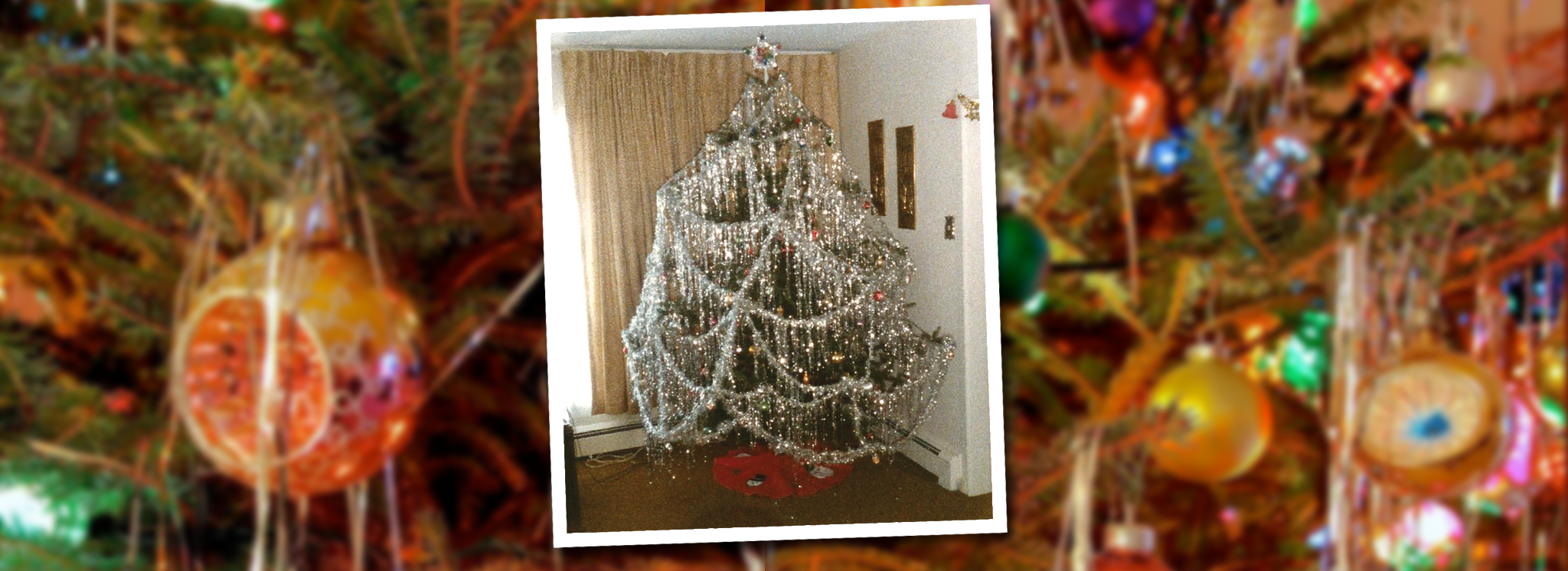
The stockings are hung by the chimney (or electric fireplace) with care, Nan’s in the kitchen mixing up the Christmas slush, and the dustbuster’s going full tilt as you try in vain to keep the floor clear of all that tinsel.
Love it or loathe it, there’s nothing like those sparkling strands that catch the glow of holiday lights and turn even the simplest Christmas tree into something magical. But did you know that this festive favourite has a history stretching back more than four centuries, beginning not as a decoration, but as a symbol of wealth and craftsmanship?
“Tinsel was first created in Nuremberg, Germany, in 1610 using thin strips of silver foil,” explains James Cooper, aka “The Christmas Expert, who runs (and writes/publishes content on) WhyChristmas.com, one of the largest Christmas information sites on the web.
“At that time, the word ‘tinsel’ was used for fabrics made of silk with gold and silver threads in them,” he tells Downhome via email. These metallic threads were woven into expensive costumes and heraldic banners and flags long before they found their way to the branches of Christmas trees.
Originally, silver tinsel strands were used to adorn things like statues. It wasn’t until the mid/late 1800s that people began draping them on evergreens. In those days, candles were the main source of tree lighting and the reflective silver foil, Cooper says, “gave the tree an extra sparkle — as it still does today!”
But real silver had one big flaw: it tarnished quickly. Eventually, other metals were used, but these came with their own problems.
“During the early 1900s, aluminum tinsel was popular, with most being made in France. But production stopped during WWI,” Cooper writes.
“Lead foil was often used to make tinsel strands in the early 1900s… However, it was banned in many countries in the 1960s and 1970s due to being a poisoning risk, especially for children.”
As materials evolved, so did the forms of tinsel, which include strands or strips not connected to a central thread (known as “lametta,” or more commonly “icicles,” Cooper notes) and tinsel garlands with short strips that are attached to a central thread.
“The first ‘tinsel garlands’ were sold in the 1890s and were made from silver-plated copper wire,” Cooper says. But the real revolution came with the invention of man-made plastic tinsel, which “became very popular as it was much cheaper than metal tinsel and also lighter to go on the tree,” he adds.
Today, most tinsel — whether strands or garlands — is made of PVC. In Europe, the largest producer is based in Wales, “where they can produce 656,000 feet/200,000 metres of tinsel garlands a month in the run-up to Christmas!” Cooper states.
Beyond its glittering history, folktales from Europe have put a unique spin on how tinsel came to be, weaving in stories about “The Christmas Spider.”
“These tales seem to have started in Eastern Germany, Poland or Ukraine but are also told in parts of Finland and Scandinavia,” Cooper writes, adding that the legend of the Christmas Spider has since crawled into other countries.
Each version of the story centres around a poor family who can’t afford to decorate their Christmas tree (“In some versions, the tree grew from a pine cone in their house,” Cooper says). “When the children go to sleep on Christmas Eve, a spider covers the tree in cobwebs. Then on Christmas morning, the cobwebs are magically turned into silver and gold strands which decorate the tree!”
In some versions, Cooper explains, it’s the light of the sun that transforms the webs; in others, the miracle is performed by the “gift bringer” — St. Nicholas, Santa Claus, Father Christmas, or das Christkind.
Today, echoes of the legend endure. “In parts of Germany, Poland and Ukraine, it’s meant to be good luck to find a spider or a spider’s web on your Christmas tree,” Cooper shares. In Ukraine, he adds, spider’s web Christmas tree decorations called “pavuchky,” which translates to “little spiders,” are also popular. “The decorations are normally made of paper and silver wire. You might even put an artificial spider’s web on your tree!”
So if, like Seinfeld’s Frank Costanza, you “find tinsel distracting,” you can always trim the tree with a gaggle of creepy crawlies instead.