The Man Behind the Mask
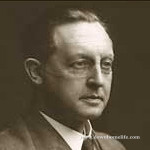
In the windswept city of St. John's, Newfoundland, on March 18, 1879, Cluny Macpherson was born into a world defined by maritime grit and community resilience. From an early age, he showed a keen intellect and a deep sense of duty—qualities that would later shape his legacy as one of Canada's unsung wartime innovators. Macpherson pursued his medical education at McGill University, graduating in 1901. He then trained at the Royal Infirmary of Edinburgh, gaining exposure to advanced medical practices. But his heart remained in Newfoundland. In 1902, he returned to serve with the Grenfell Mission, a medical outreach initiative that brought care to isolated fishing communities along the Labrador coast. There, he operated the hospital in Battle Harbour and served as a special constable and justice of the peace—roles that required both medical expertise and moral leadership.
World War I erupted in 1914, and Macpherson enlisted as a captain and Principal Medical Officer of the 1st Newfoundland Regiment. He served in multiple theatres of war—France, Belgium, Egypt, Salonika, and Gallipoli—where he witnessed the brutal realities of trench warfare and the evolving nature of combat. On April 22, 1915, near Ypres, Belgium, the German army unleashed a new and terrifying weapon: chlorine gas. Over 136 tonnes of the greenish-yellow cloud drifted toward French lines, causing panic and gruesome deaths. Soldiers gasped for air, their lungs seared by the toxic fumes. It was the first large-scale chemical attack in modern warfare, and it exposed a deadly vulnerability in Allied defences. Macpherson, alarmed by the devastation, began experimenting with protective gear.
Drawing inspiration from German gas masks and his own medical knowledge, he devised a rudimentary but effective solution: the British Smoke Hood, also known as the "hypo helmet." Made from chemically treated fabric with a mica eyepiece, the hood covered the entire head and allowed soldiers to breathe safely in contaminated air. Macpherson's contributions did not go unnoticed. He was appointed to the War Office Committee on poisonous gases, where he advised on chemical warfare strategy and protective measures. His expertise helped shape the British military's response to chemical threats, and his mask became a standard issue item for troops in the trenches. In 1916, after sustaining injuries in Egypt, MacPherson returned to Newfoundland. He was later promoted to Lieutenant-Colonel and demobilized in 1919. But his service to his province and country continued. He became president of the St. John's Clinical Society and the Newfoundland Medical Association, advocating for improved public health and medical education.
Despite his achievements, Macpherson's story faded from public memory after he died in 1966. Today, his legacy is preserved in archives and museums. At The Rooms, a cultural complex in St. John's, a prototype of his original gas mask—complete with cracked mica eyepiece and woollen fabric—is carefully stored and displayed. It stands as a silent testament to a man who saw suffering and chose to act. In remembering Cluny Macpherson, we honour not just a brilliant physician, but a humanitarian who saw suffering and chose to act. His story reminds us that even in the darkest times, some rise to protect others, not with violence, but vision.
Submitted by: H. Joseph Seward
Downhome no longer accepts submissions from users who are not logged in. Past submissions without a corresponding account will be attributed to Downhome by default.
If you wish to connect a submission to your new Downhome account, please create an account and log in.
Once you are logged in, click on the "Claim Submission" button and your information will be sent to Downhome to review and update the submission information.
Leave a Comment
MORE FROM DOWNHOME LIFE
Recipes
Enjoy Downhome's everyday recipes, including trendy and traditional dishes, seafood, berry desserts and more!
Puzzles
Find the answers to the latest Downhome puzzles, look up past answers and print colouring pages!
Contests
Tell us where you found Corky, submit your Say What captions, enter our Calendar Contest and more!