Newfoundland Changes: Memories of Two Visits 40 Years Apart
Newfoundland has been one of my favourite places to visit. Many things change as time passes. Although I have not been there in 25 years, I got to remembering my past visits. This is how I viewed a year in 1960 and a second three-week visit in the year 2000. You know what exists today. Physical. Cultural. Structural. Environmental. Other.
On my first visit in 1961, I drove from Washington D.C., bypassed New York City, crossed southern New England and turned north the length of Maine. I crossed into Canada and drove through the Maritime Provinces to the North Sidney ferry landing. A three-day drive on mostly two-lane roads.
The ferry ride to Port aux Basques, Newfoundland, was smooth. No ferry to Argentia at this time. A couple of whales breached. We sailed past St. Pierre. Lots of birds. As we approached Port aux Basques, you could see pretty coloured houses along the shore in several villages. Red. Blue. Green and other colours. Each fisherman had his house, barn and fish flakes painted his colour. I guess this was to keep from getting lost in foggy weather.
A few miles out of Port aux Basques, the road became a dirt road. Often muddy, few bridges, mostly fords. All the couple hundred miles to St John’s. Then, there was another 90 miles of dirt to Argentia Naval Air Station. When the lumber trucks began running in the spring the trucks churned the roads to a sea of mud. Once, I sunk my car so deep I could not open the doors and had to climb out the window into knee-deep soup. A lumber truck came along and pulled me out. If a sign said steep hill, they really meant steep.
I stopped for a young man standing along the road selling a boiled lobster that I consumed along the way.
I traveled this same route, in reverse, returning home on my second trip. This time, the roads were paved and part of the Trans-Canada Highway (TCH) system. There were bridges instead of fords. Many of the side roads had been rerouted and paved. Many villages bypassed by the main road. A really pleasant drive. I met a trans-Canada road race team along the way. Parks and other features were marked and there were information stations along the road. I stopped at several parks and scenic overlooks along the way. Even the main roads on the mainland were much better, as part of the TCH. Some sections were multilane and some even had shoulders and road signs.
Back in 1960 communication was by phone or shortwave radio. In the winter villages could talk to Australia but not next door. On the second trip there was a cell tower in sight most of the time. AI was getting started. What next?
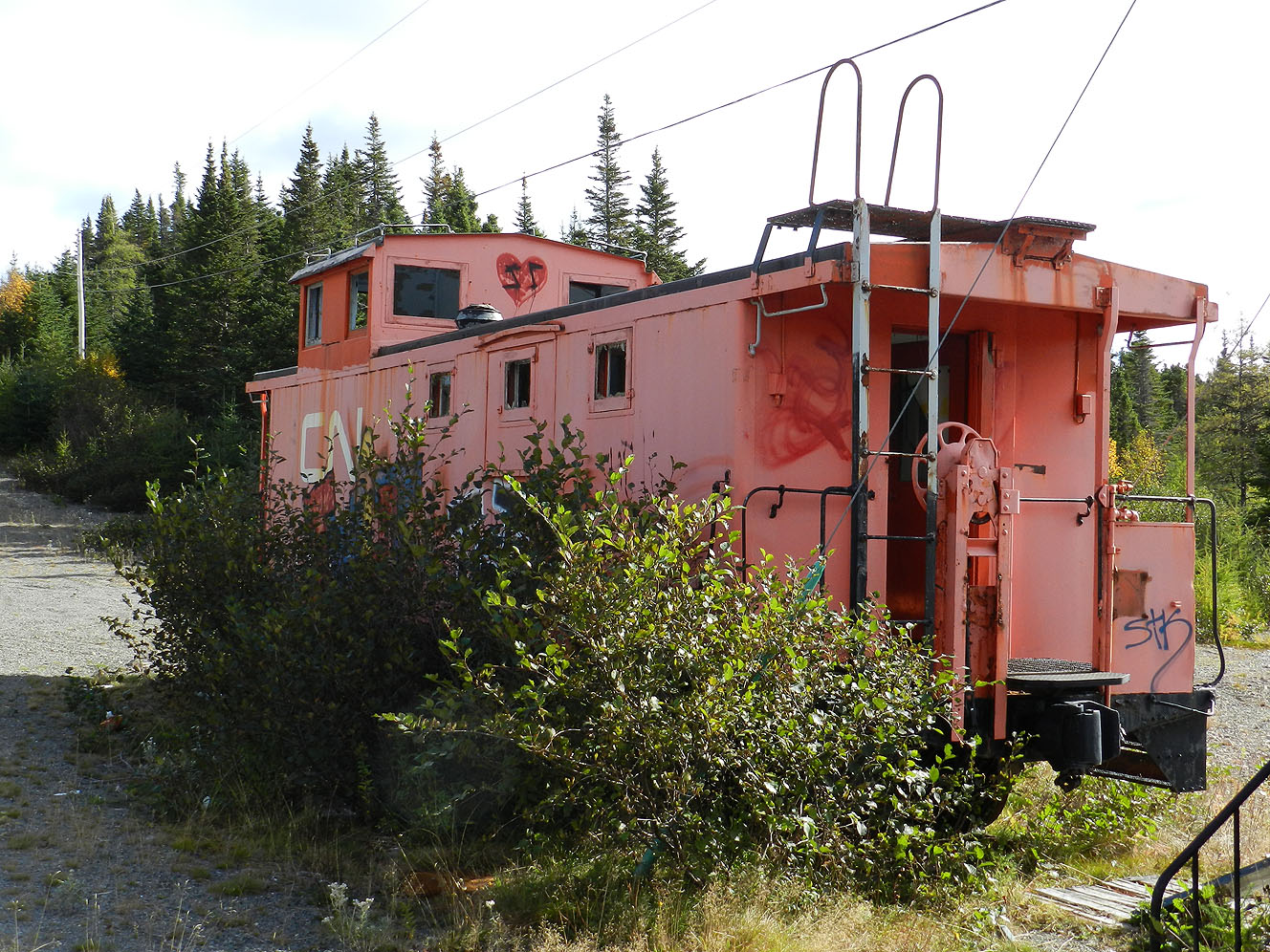
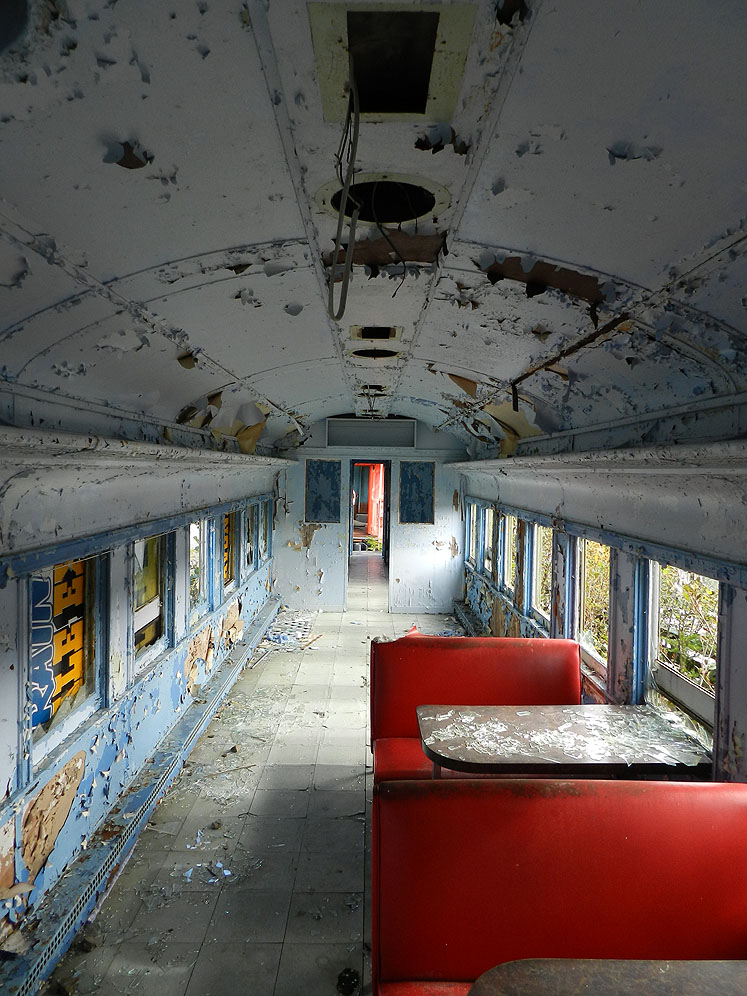
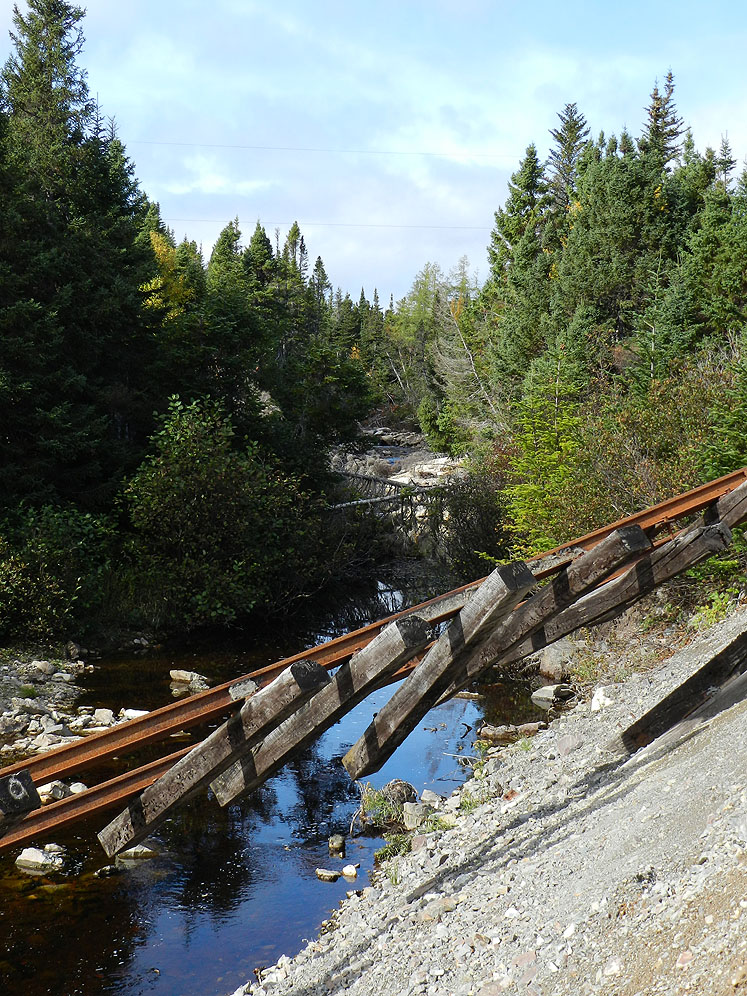
The railroad had disappeared. The old right-of-way became a walking trail.
One major change was the housing. The coloured houses were mostly gone. In the 1970’s, when the US was building homes with white asbestos shingles, salesmen hit Newfoundland villages and installed these same white asbestos shingles everywhere. Lifetime guarantee. Poor installation and the Newfoundland weather made short work of this new feature. Cold, wet winters and long, hot summer days. The coloured houses disappeared. Replaced by houses with warped and stained siding.
When I first arrived in 1961, many of the houses were single-wall construction. This is where the studs had boards siding only on the outside. Newspaper was tacked between the studs on the inside to keep out the wind and some of the cold. I remember reading about WWII on newspapers in the walls.
American plane-watchers had been in a number of coastal villages. Argentia Naval Air Station was only a couple years old when I arrived. New buildings, docks and runways. My squadron had been there a year as part of the North Atlantic Barrier. I flew as ECM operator on radar Constellations called Navy WVs and Air Force RC-121. The planes had a search radar in a big pod under the belly and a tall height finder radar on the top covered by a tall dome. Giraffe carriers. My crew flew 12–14-hour loops across the north Atlantic weekly tracking anything Russian as part of the Cold War. The squadron existed for about three years until the BMEWS, the over-the-horizon radar at Thule, Greenland, came online covering much of the north Atlantic. The base lasted a few more years. It closed and was leveled.
I rented a fishing boat with an old Atlantic two-cycle engine. I could jig cod almost anytime I went out. There was also a caplin run with lots of little fish along the beaches. Then there was squid jigging. The fish stocks were over-fished and fishing was restricted. With controls, the fish stock had recovered. I fished for trout and salmon in many streams. I camped, hunted ptarmigans, spied on the caribou herd and dodged moose on the roads. How are things now?
My second trip landed at Argentia as being closer to St John’s. All the base buildings had been destroyed. The docks expanded to accept the ferry and cargo ships delivering material to several factories that had built on the old base. I suppose this has expanded since I was there last.
There were some other changes. All my old friends were gone. Signal Hill had become a historic site and the Cabot tower a museum. The university had moved and expanded. Lots of little things.
The trip back was different. On my first trip I had flown out of St John’s. On the second trip flights went to Gander. I drove back through a hurricane.
Wonderful memories. The older generations should remember. The younger people need to learn about their past so they can learn and prepare for the future.
Carl Lahser
Downhome no longer accepts submissions from users who are not logged in. Past submissions without a corresponding account will be attributed to Downhome by default.
If you wish to connect a submission to your new Downhome account, please create an account and log in.
Once you are logged in, click on the "Claim Submission" button and your information will be sent to Downhome to review and update the submission information.
Leave a Comment
MORE FROM DOWNHOME LIFE
Recipes
Enjoy Downhome's everyday recipes, including trendy and traditional dishes, seafood, berry desserts and more!
Puzzles
Find the answers to the latest Downhome puzzles, look up past answers and print colouring pages!
Contests
Tell us where you found Corky, submit your Say What captions, enter our Calendar Contest and more!