My Grandfather Chesley White – The Swiler
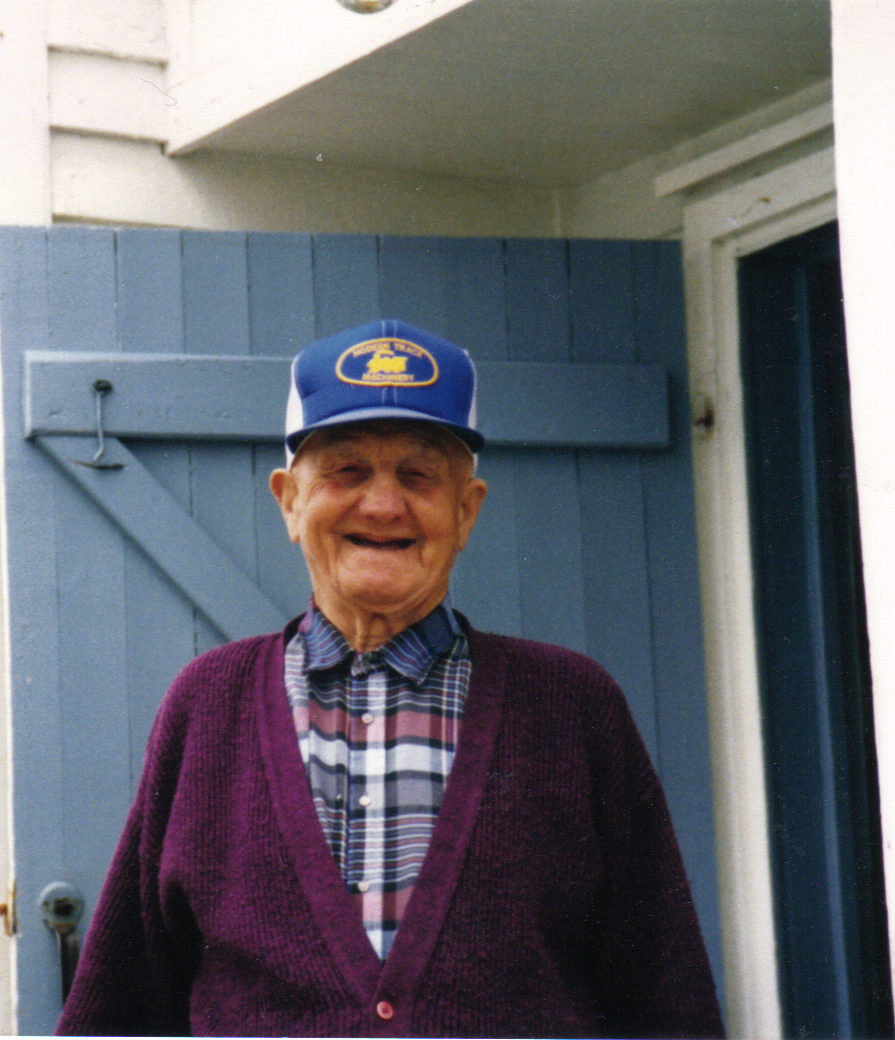
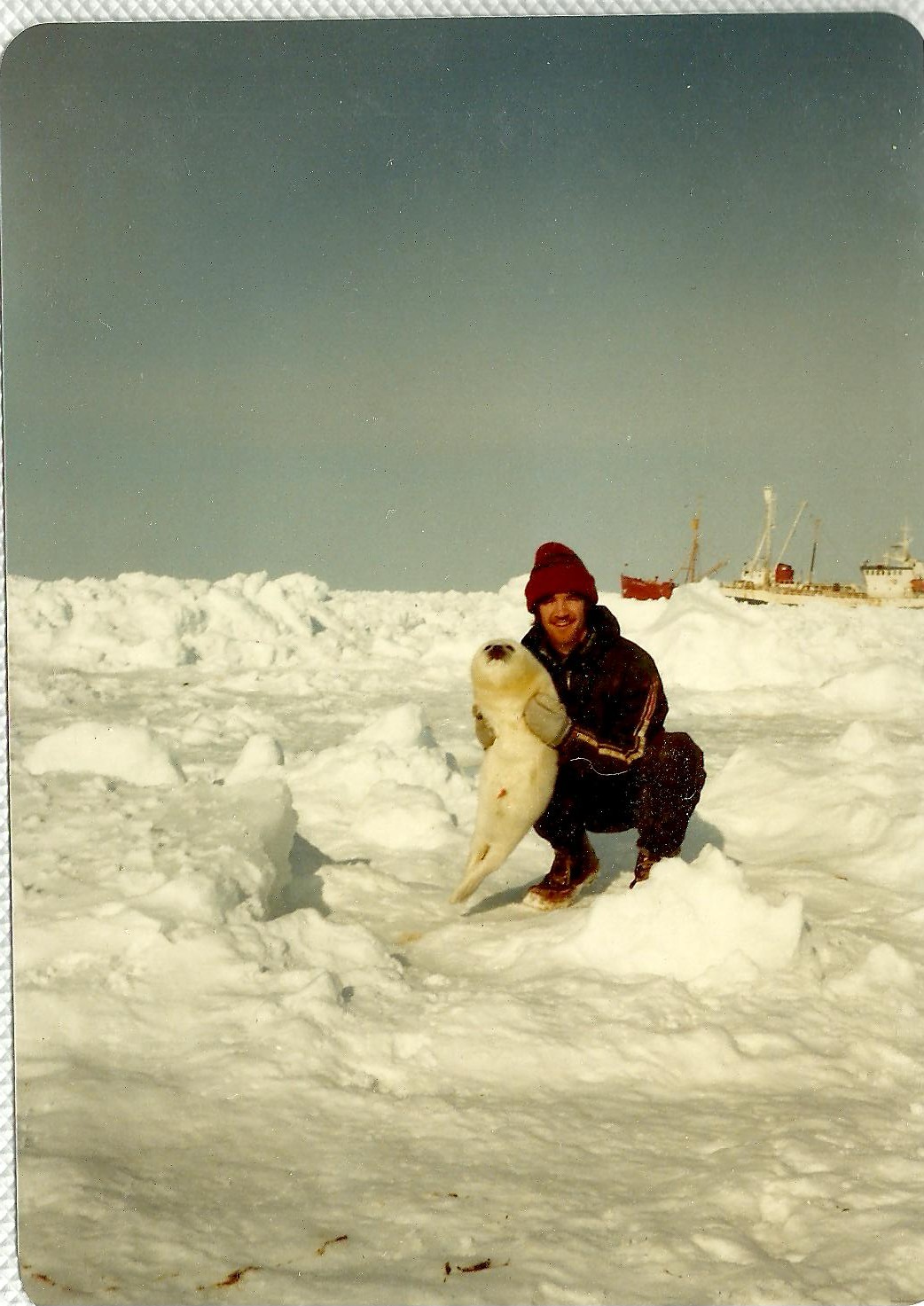
As a young lad growing up in Bonavista sealing was often on the tips of many tongues in the spring of the year. We’d often go down to the shoreline, when the ice was ‘on the land’ as they used to say, to watch ‘sealers’ copy across the frozen landscape and head out in search of seals. We never knew much more than that about sealing except of course for what may have been told to us by others, usually the ‘old’ folks. One of those old folks was my grandfather, Chesley White. Born and bred in Lance Cove, a short jaunt from Bonavista. Little did I know to at that time, as a teenage boy, that one day I too would go to ‘the front’ like my grandfather to harvest seals but under much grander conditions. Grandfather White was born in 1907 at Lance Cove, about 3 or 4 miles to the east of Bonavista on the Trinity Bay side. His wife, two sons and a daughter ( my mom Margaret) were deeply rooted in Bonavista and dependant on the sea for a livelihood. Of course it was cod in the summer, harvesting crops in the fall, cutting firewood in the winter and sealing in the spring of the year. That is if you were lucky enough to secure a ‘berth’. Only the hardiest of men would get this much coveted ‘berth’ and the companies in St. Johns knew them well. As a teenager I would anxiously sit at my Grandfathers White’s side, almost falling to the floor with every word as he recalled his stories from the front. They weren’t all bad but sadly the stories of death on the ice were always the hardest to listen too, and of course the hardest for him to recall. He’d talk about the Ungava, Young Hood, The Viking etc.....just as if they were new cars never before driven. His excitement was always evident, getting to St. Johns by train, seeing old buddies that he hadn’t seen since last spring as they walk up the gangplank to board these massive schooners. Days and days helping bring provisions aboard, salt beef, hard tack, bologna, flour....all to help sustain them for what could be months away from home, depending of course on the strength of the ice and power of the schooners engines. My Grandfathers most vivid recollection from his days on the front of course was from the spring of 1931. It was the year the ‘SS Viking’ was blown up by a powerful onboard explosion. The Vikings keel was laid in 1881 in Oslo Norway and launched a year later in 1882. This wooden hulled whaling ship was of 620 gross tonnage and equipped with a 90 horsepower auxiliary engine. For years the SS Viking and her crew hunted for saddleback seals off the coast of Greenland but in 1904 was purchased by the Bowring Brothers of St. Johns and even though she was the smallest of their fleet it was their pride and joy. She could carry 276 men to the front and for 52 years the Bowring Brothers had not lost a ship or crew member. On March9th, 1931 a famous New York filmmaker Varrick Frissel and his Hollywood film crew set sail from St. Johns to shoot the final scenes for an epic feature film called The Viking , all about the lives of Newfoundland Sealers. On March 9th, 1931 disaster struck the Viking and her crew. While stuck in ice about 8 miles off Horse Islands a powerful explosion blew the stern off this once proud sealing ship and the once temporary safe home away from home for 147 men. Master Mariner and famous Northern Expeditions Captain Bob Bartlett was behind the helm of the Viking for the movie film but was skippered that sad day by well know sealing captain Abram Kean. Sadly filmmaker Frissel and his sidekick A. G. Penrod died in the explosion but so did 25 other men, all Newfoundland Sealers. The Viking ultimately caught fire and sank while some of the survivors made it over the ice to Horse Islands. Some of the survivors were also picked up by other sealing vessels in the area. My Grandfather White was on one of those sealing rescue ships some 10 to 12 miles away and remembered that day and the horrific sound of the explosion vividly. It was a calm day, according to him, and taking the survivors over the side was an exciting time. But sadness soon set in as they learned many did not make it. Grandfather recalled that as the skipper maneuvered his ship closer and closer to the explosion the magnitude of the disaster became more apparent. He recalled tins of molasses, empty barrels, pieces of the ships superstructure everywhere. But as he continued what he saw was crippling. Body parts of sealers everywhere, young men and some older men......some were obviously awakened from their naps while others were doing onboard chores. The work to pick up these lost souls was difficult. My grandfather was one of a group of men who volunteered to go over the side, not for seals this time, but to pick up the bodies of their fellow Newfoundlanders. He recalled it as one of hardest things he ever had to do in his lifetime. He never ever spoke willingly of this ordeal, but after much coaxing relinquished his memories. As I said previous, never did I as a teenager ever think that one day I too would sail to the front in search of seals like my Grandfather White. But I did. In 1982 the call came from Captain Morrissey Johnson. I didn’t hesitate and my first call was to my Grandfather White to tell him. There was a moment silence and then a quick ‘whate talking about Freddie’ .........I went to the front that year, keeping all my grandfathers memories tucked quietly away in my mind. When there were quiet times, usually lying in my bunk, I would recall his many stories but his Viking Disaster memories always seemed to jump to the forefront. Standing on the deck I would look out over the ice covered ocean many times wondering how close we were to where my Grandfather actually jumped over the side harvesting seals so many years ago and to rescue his fellow sealers that sad day..... In 1983 the ‘Big Ship’s’ would travel to the ice flows of Labrador for the very last time. And I was gonna be there. Once again I would sail onboard the MV Clayton M. Johnson, under the command of one of Newfoundland’s most famous sealing Captains, Captain Morrissey Johnson. Also that year Captain Johnson’s company would send the M.V Lady Johnson, skippered by Captain Ulf Snarby of Norway and the 81-1, Captained by Catalina Native Skipper Walt Bragg. There would be an unusual twist this year however. With the treat of animal rights activists and Greenpeace threatening to disrupt the hunt soon after the sealing vessels left the Narrows in St. Johns, Captain Morrissey Johnson decided he would have his fleet and sealers blessed in his home town port of Catalina. So for the first time there would not be a blessing of the fleet on the waterfront in St. Johns and the sealing ship’s would depart for the front from Catalina, well ahead of any advances of Greenpeace and the Rainbow Warrior. But for me this move allowed me to do something I wanted to do in 1982 but was unable to. For now I could bring my Grandfather White from Bonavista to Catalina and see the ship his grandson would be sailing to the front on. At the age of 75 my grandfather was about to go back in time, or was he. The MV Clayton M. Johnson was a modern sealing vessel, ice strengthened to withstand the ice flows of the north, and with a powerful main engine that could manoeuver through any thickness of ice. As my Grandfather White got out of my car and walked up to the Clayton M. Johnson and the other 2 ships, I could see the excitement in his eyes. But as he climbed the gangplank and went on deck a flood of emotions must have overcome him and he became quite emotional. His eyes filled and tears flowed down his weather beaten cheeks......I couldn’t help wonder what he was thinking. I guided him around the ship with my arm under his. Together we stood in the wheelhouse......looking out over the deck and the other 2 sealing ships. Oh how I wished many times we had a picture taken at that time. He visited the galley, met the cook, Skipper Johnson and had a chuckle, though guarded. I took him to the forward peek, explained how we turned the middle hold into a flipper pound and so on. But his emotions seemed to get the better of him when I took him to my cabin. Two sealers to a room, our own bunks with a nice soft mattress, nice clean, warm linens and our own wash basin. He sat for a spell......looked around the room, smiled a bit, shed a few more tears, remembering I guess.....and quietly once again recalled the conditions he had to endure when he was a sealer in the 30's and 40's........I told him of the potential earnings for a sealing trip these days, many thousands of dollars, and he told me some springs he’d make 30 or 40 dollars. The most he ever made was 60.00. Some springs he didn’t make anything. He returned on May 3rd, 1933, the day his only daughter Margaret, my mom, was born. That year he made nothing as they were stuck in the ice for more than 4 weeks, miles and miles from the seal herd. Once again a quiet came over him....and he softly wished me good luck and reminded me to ‘ be careful out there now Freddie won’t you, you be careful ? ’........ Frederick A. Russell Port Union, NL. Submitted By: Frederick Russell
Downhome no longer accepts submissions from users who are not logged in. Past submissions without a corresponding account will be attributed to Downhome by default.
If you wish to connect a submission to your new Downhome account, please create an account and log in.
Once you are logged in, click on the "Claim Submission" button and your information will be sent to Downhome to review and update the submission information.
MORE FROM DOWNHOME LIFE
Recipes
Enjoy Downhome's everyday recipes, including trendy and traditional dishes, seafood, berry desserts and more!
Puzzles
Find the answers to the latest Downhome puzzles, look up past answers and print colouring pages!
Contests
Tell us where you found Corky, submit your Say What captions, enter our Calendar Contest and more!