By Dennis Flynn
Facts and Folklore Behind Harbingers of Impending Bad Weather in Rural NL
The rubber-clad zodiac inflatable boat glides over the glass-clear waters of Conception Bay. It’s a somnolent Sunday afternoon near the southwestern edge of Little Bell Island. The distant fog-shrouded plateaus of Kelly’s Island resemble a great pirate ship looming out of the mist of plunder past. A pair of eagles keep watch from a rocky perch high overhead, while gulls drift by at sea level with practiced indifference. A herd of goats, some 14 members in all sizes and shapes, head along the cusp of the clifftop, pausing to almost pose for a photo before continuing the climb upward towards wherever they go upon the uninhabited island.
I smile and tell Conception Bay South resident and photographer Greg Horner, who is at the tiller, “Well, that’s not something you see every day. If they are heading back up the cliffs, that means the fore- cast rain showers are probably not going to hit us.”
Sure enough, the fog disappears within minutes, and the sun beats down to reaffirm the supremacy of the caprine weather predictors.
My father, Tony Flynn (age 83 as of this writing), explained that in the 1940s and 50s, goats in groups as large as 100 roamed around Colliers unimpeded. “They had pathways carved like lace patterns on a table-cloth all over the landscape, you could follow for miles as a child,” he’d say. “Now in those times the summers were very hot, and it could be a gorgeous day with the sun almost splitting the rocks and not a cloud to be seen. But if you suddenly saw the goats coming down en masse off the mountain, you ran and covered up the drying hay or bought in the wash off the clothesline, because you could put money on it that hard rain was coming within a half hour or so.”
The reverse was also true, he said. “When the goats started to head back up in large numbers, it meant the weather was going to clear soon. They must be more sensitive than humans to changes in the air pressure so they can sense the weather changing. We used to joke that the goats were a poor man’s barometer in Colliers.”
This conversation brought back my favourite examples of harbingers of impending bad weather in Newfoundland and Labrador.
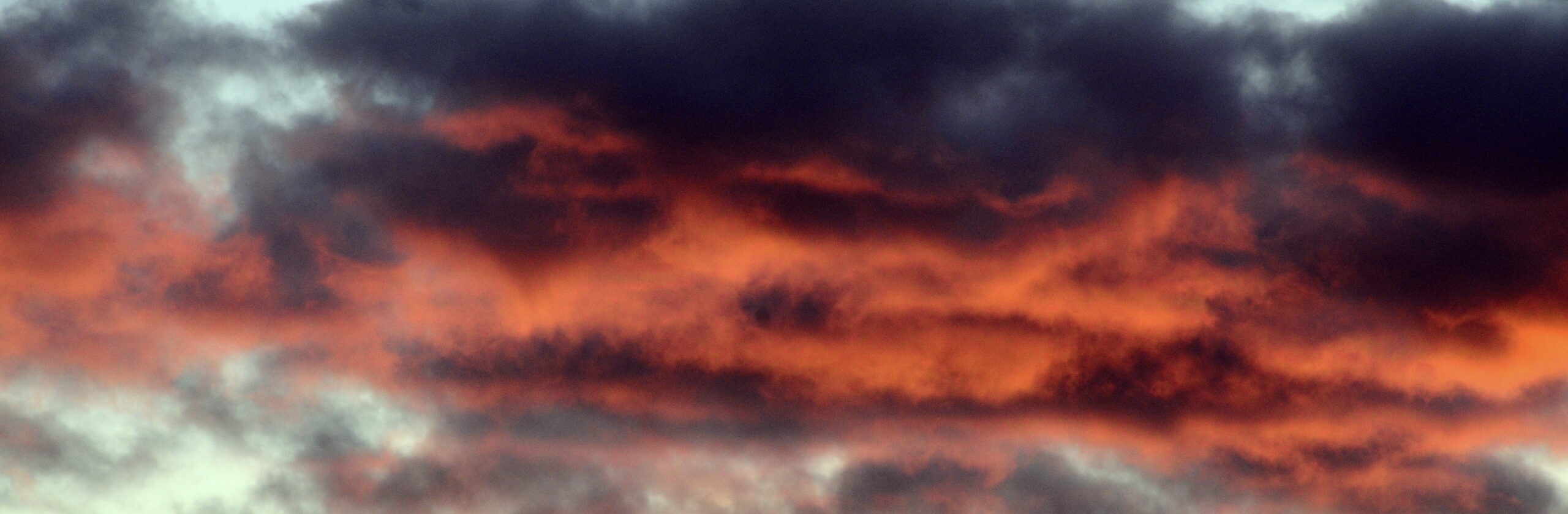
Of course, many readers are familiar with the mantra “Red sky at night, sailor’s delight, red sky at the morn- ing, sailors take warning.”
According to an article on meteorological mysteries by the Science Reference Section of the Library of Congress, there are facts to back this:
“When we see a red sky at night, this means that the setting sun is sending its light through a high concentration of dust particles. This usually indicates high pressure and stable air coming in from the west. Good weather will follow. A red sun- rise can mean that a high-pressure system (good weather) has already passed, thus indicating that a storm system (low pressure) may be moving to the east. A morning sky that is a deep, fiery red can indicate that there is high water content in the atmosphere. So, rain could be on its way.”
Another intriguing phenomenon is the parhelion, more commonly called sundogs or sunhounds. It’s often recognized as “an atmospheric optical phenomenon that consists of a bright spot on one or both sides of the sun.
Two sun dogs often flank the Sun within a 22° halo.”
Sundogs are formed by the refraction and scattering of light through specially-shaped ice crystals sus- pended in the air. While the true origin of the term is unknown and dates back to antiquity, I like the Scandinavian folklore suggesting it is a constellation of two wolves hunting the sun and the moon, one wolf travelling before and one after. The parhelion in Newfoundland and Labrador folklore is believed to indicate coming cold and storms.
Perhaps the most poetically-named visual is what Tony Flynn and members of an older generation still call “The sun drawing water.”
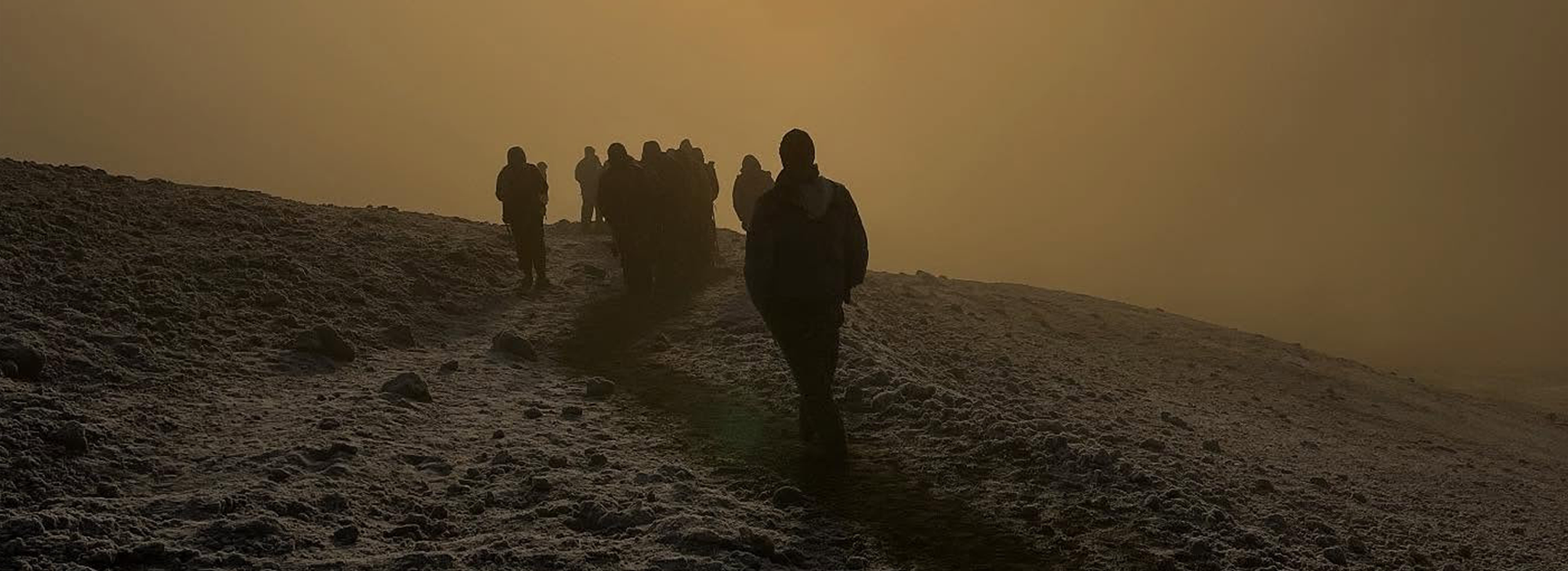
The technical name is crepuscular rays, but they’re often called God rays. They are essentially sunbeams that originate when the sun is peak- ing from near a layer of clouds, during the twilight period. The rays resemble slanted parallel railway tracks going from Earth or over the ocean up to the sky. According to old hands, it’s a sign that rain may soon be on the way.
Tracy Lawrence, originally of English Harbour West, mentioned that due to her hometown’s geographic layout and frequent coastal atmos- pheric changes, rays could often be seen over a graveyard near sunset. Kind-hearted seniors would say that the souls of recently departed were riding the beams of light up to heaven.
My final favourite offbeat weather item departs from the land of God to the realms of fairies. The enchantress Morgana Le Fay from the legends of King Arthur lent her name to the Italian phrase “Fata Morgana” (or “The Fairy Morgana”). “A Fata Morgana is a complex form of superior mirage that’s seen in a narrow band right above the horizon,” which “significantly distorts the object or objects on which they are based, often such that the object is completely unrecognizable.”
A Fata Morgana may be seen on land or at sea, in polar regions, or deserts and may involve almost any kind of distant object, including boats, islands, and the coastline. “The mirage comprises several inverted (upside-down) and upright images stacked on top of one another. Fata Morgana mirages also show alternating compressed and stretched zones.”
In Newfoundland, old fisher people familiar with normal positions and sizes of prominent local landmarks report seeing Fata Morgana on Conception Bay. This occurs on rare hot winter days when the air temperature is unseasonably high over the much colder ocean, creating the unsettled thermal conditions and air duct needed.
Since they change quickly, the Fata Morgana are notoriously difficult to photograph but amazing to see. Locals say Fata Morgana is followed a day or so later by unfavourable weather, as if the fairies were having a little joke.
Share your encounters with offbeat weather phenomena and the local folklore behind it to editorial@downhomelife.com. You never know what great stories might come from predictions of a spell of bad weather.