The Story Behind a Remarkable Woman and a Most Unusual Military Artifact
By Dennis Flynn
Standing on a beach in the hauntingly pretty south coast community of Belleoram, Newfoundland and Labrador, as the waters of Fortune Bay encroach, the hints of long habitation abound. The French were here in the early 1700s, and the famous explorer Captain James Cook mapped it in 1765. Older style salt box houses still hug the road while fishing stages on wooden stilts tiptoe into the tidal strand.
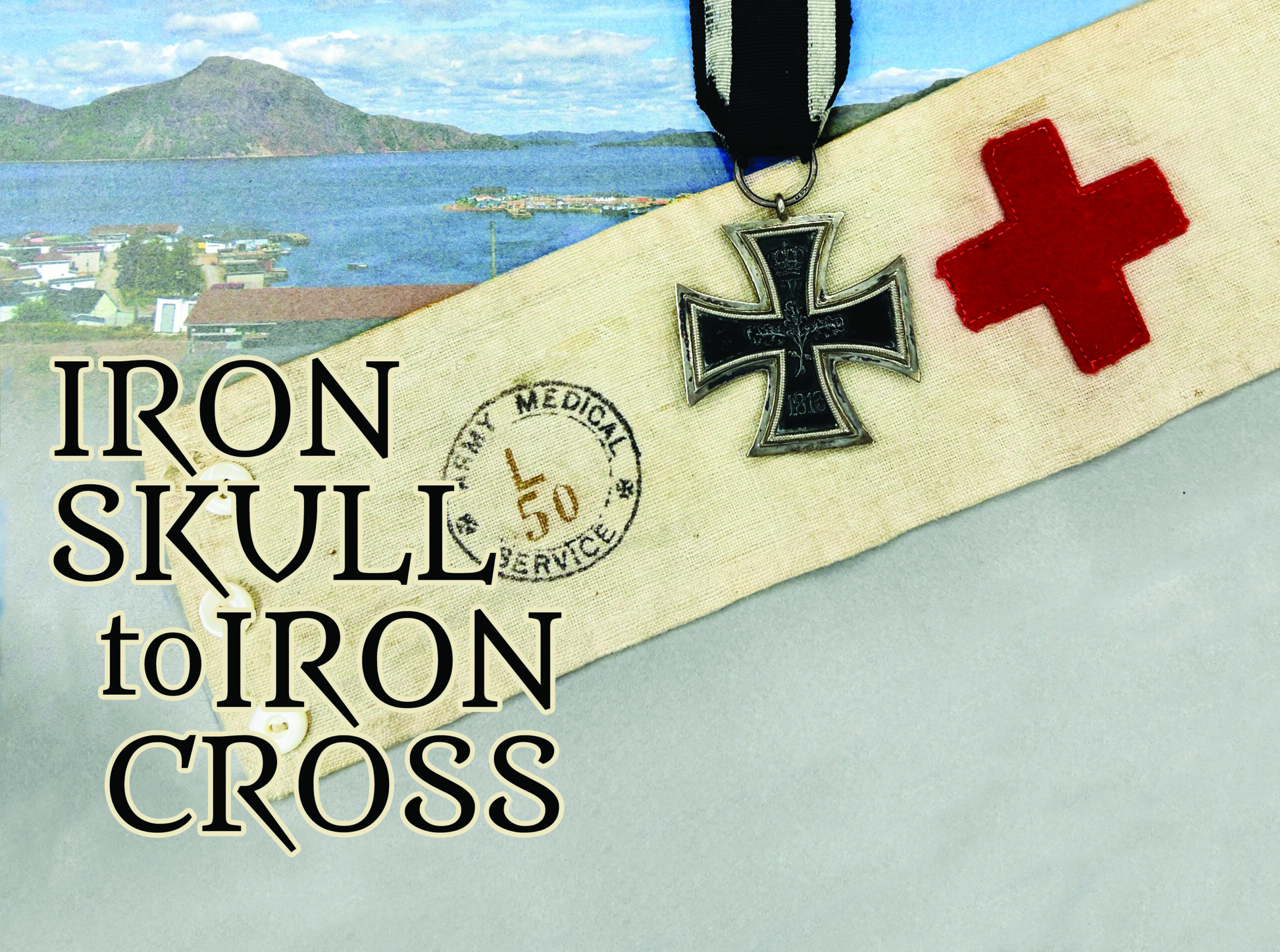
In the distance, the famous Iron Skull Mountain, promising a spectacular vantage point, beckons on this summer afternoon, but time is short, so that hike must wait for another day. Still, whenever I pass this way, I can’t help but think of one of the community’s most famous residents, the amazing Frances (Fanny) Cluett (1883-1969).
According to a biography at the Maritime History Archives (MHA) website, Fanny Cluett joined in the fall of 1916 the Voluntary Aid Detachment (VAD), a group of volunteer nurses founded in 1909 by members of the British Red Cross and St. John’s Ambulance. The VADs became an invaluable resource during WWI, providing basic medical services in the understaffed hospitals and convalescence homes in Europe.”
In addition to nursing, a VAD might serve many roles, including ambulance driver, cook, kitchen maid, clerk, or fundraiser. Around 38 women from Newfoundland served as VADs during WWI. Fanny Cluett was 33 when she signed up, moving through the ranks rapidly. Not long after finishing her training in England, Fanny was sent to work at the military 10th General Hospital in Rouen, France.
Apart from her compassion and strong work ethic, Cluett is best known for her detailed and very descriptive series of letters she sent home during the war. These documents provide tremendous glimpses into VAD nurse duties and the horrors of war. She managed to balance that by recounting people and positive aspects of her surroundings.
A talented lady in several fields, she captured photos, compiled albums with informative notes, and created paintings. There’s a small collection of her original items preserved for researchers to study at the Archives and Special Collections of the Queen Elizabeth the Second Library (QEII) of Memorial University in St. John’s.
To find out more about Cluett and a very particular military item in her effects, I visited with David Mercer of Archives and Special Collections in September 2024. He graciously shows me several things from the Frances Cluett Collection, including her watercolour paintings of the hospital at Rouen and her photo albums. There’s a striking picture in black and white, reminiscent of the style of a carte de visite (cdv) of Cluett bedecked in her white VAD uniform, eyes forward, left arm akimbo on the hip, and still appearing as if about to step out of the past and into action more than a century later.
“Frances Cluett was commonly referred to as a nurse during the First World War. She was a member of the Voluntary Aid Detachment (VAD) who, at the start of the war, decided she needed to do her part and signed up to serve. After training in England, she ended up in 1917 at the 10th General Hospital in Rouen, France,” Mercer notes.
“She was able, through her letters, paintings, and photographs, to provide a very interesting insight into her experiences during the war. We know from her letters that she wrote home that she would have treated German soldiers who had been taken prisoner and required medical attention at the hospital in France. Cluett showed quite a bit of compassion to these German soldiers, treating them as she would our own soldiers. She didn’t seem to make any distinction between the two. The nationality of patients didn’t seem to matter to her. She seemed to treat everyone with the same compassion. There are a number of instances where she writes of treating German soldiers who are having a particularly tough time of it.”
Mercer explains that one of the more interesting pieces in their collection is a German Iron Cross medal.
“We haven’t really yet been able to corroborate it in the assortment of letters, but according to the story from the family related to us, Cluett was given this medal by a wounded German soldier,” he says. “It was in appreciation for the care and compassion she had shown to him and the German soldiers at the camp.”
With that, I look at the distinctive black Iron Cross medal. For military historians, the award was first established by the Kingdom of Prussia in 1813 by Friedrich Wilhelm III. The Iron Cross was later awarded to military members in Germany during World War I. The “W” on the medal is the royal cypher of Wilhelm II. It was usually given for bravery in battle or other contributions to a battlefield environment.
Laid against the crimson red cross adorning Fanny Cluett’s VAD arm band. The juxtaposition of the two symbols is so visually striking and profoundly moving that nothing is said for a few moments.
Finally, I ask, “How common was this to happen?”
“It is unusual,” he adds, thoughtfully. “I don’t think it is the only instance of this sort of event taking place, but it is a wonderful thing to have, where you have so many different pieces you can pull together to get a larger view of her experiences during the war. This symbol of bravery and maybe valour from another individual given in appreciation speaks volumes as to what she was able to do for him. Wonderfully remarkable woman.”
Fanny Cluett returned to Belleoram in 1920, where she was a beloved teacher, ran a small general store, and played the organ in church. Older locals I chatted with remembered her fondly. Cluett died in November 1969 at 86 years old, but her legacy lives on.
She moved from the Iron Skull to the Iron Cross and, through her compassion for wounded enemy soldiers, found a way for a medal denoting valour and victories to become emblematic of grace and gratitude. A powerful reminder that even in the fog of war, small miracles can cross paths.