By Christopher Payne
Everyone has heard of Fogo Island. Next, they need to hear about Little Fogo Islands.
One of Newfoundland and Labrador’s largest offshore islands, Fogo Island is home to 11 distinct communities spread along its coastline. While each maintains its own identity today, many trace their roots to smaller settlements once scattered across nearby islands and sheltered coves, whose residents eventually relocated to the communities that exist on the island today. Built on a rich fishing heritage and now known internationally for attractions such as the renowned Fogo Island Inn, stunning hiking trails, spirited festivals, and dramatic coastal scenery, Fogo Island has become a destination in its own right. Yet beyond the communities and landmarks that draw visitors from around the world, there is still a lesser-known place that offers a rare glimpse into the area’s history.
After the approximately one-hour ferry ride to Fogo Island, many visitors feel they have reached one of the most remote places accessible in our province. What many don’t realize is that there is even more to discover just off its rugged coastline. Nestled off the community of Joe Batt’s Arm sits the even more remote archipelago known as Little Fogo Islands.
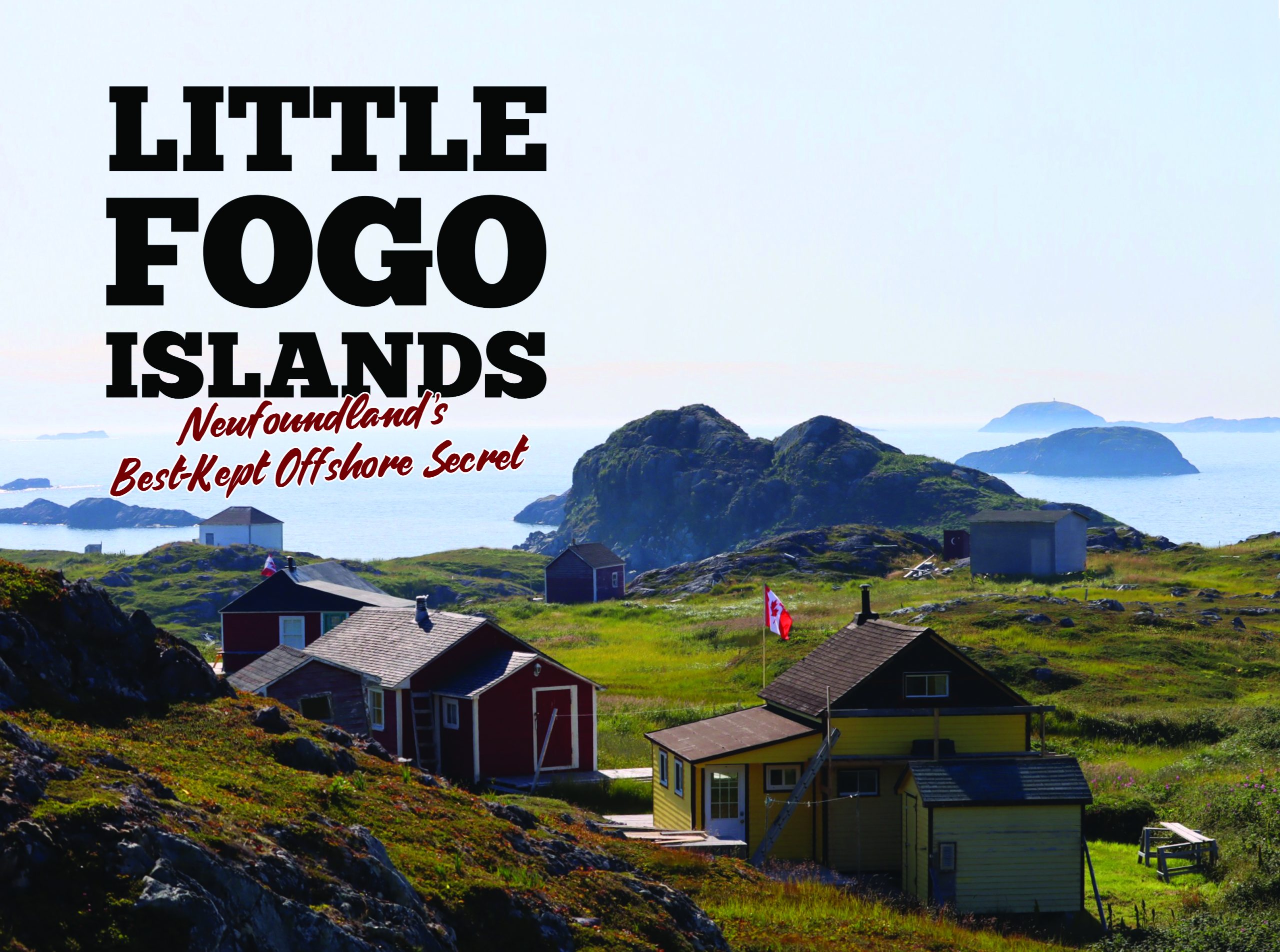
A resettled community whose last year-round residents officially left in 1937, Little Fogo Islands remains remarkably alive today. Long-abandoned fishing stages still line the coastline, while Wadham’s Harbour continues to serve as a seasonal home-away-from-home for many Fogo Islanders with cabins in the area. The surrounding islands are filled with nesting puffins, murres, and countless other seabirds, while the historic St. Anne’s Church continues to stand watch over the landscape. Built in 1867, the one-storey wooden Roman Catholic church has become one of the island’s most recognizable landmarks.
Today, locals regularly make the boat ride to Little Fogo Islands to visit cabins, check lobster pots, and enjoy recreational cod fishing. For many, these visits are an opportunity to maintain connections to a place where their parents, grandparents, and generations before them once lived and worked. The history of Little Fogo Islands remains woven into the lives of many Fogo Islanders who continue to return seasonally. Now, visitors are increasingly discovering the area for themselves through boat tours that depart from Fogo Island throughout the summer months. There is also the possibility of spotting whales or icebergs drifting offshore along the way, though nature never makes guarantees.
As you approach the island, the cross atop St. Anne’s Church appears first over the rolling hills. Entering Wadham’s Harbour, visitors are surrounded by the sounds, movement, and unmistakable presence of puffins and other seabirds, all seemingly eager to welcome guests to their quiet home. The small, shallow harbour is dotted with fishing stages that welcome visitors stepping ashore, while grassy hills rise above the water, lined with seasonal cabins and winding walking paths. Today, Wadham’s Harbour serves as the main landing place for visitors exploring Little Fogo Islands. The protected harbour that once sheltered fishing vessels continues to serve as a gateway to the community.
After arriving, a short walk uphill leads to St. Anne’s Church, where visitors are welcome to respectfully step inside and experience a rare glimpse into Newfoundland’s outport past. Preserved through years of dedicated care and maintenance, the church’s exterior and interior reflect the simplicity and character of places of worship from another era. A guestbook inside allows visitors to leave their name behind as part of the island’s continuing story.
Little Fogo Islands stands as a reminder that even after resettlement, places can continue to hold deep meaning. The spirit of outport Newfoundland quietly endures there, just off the coast of an island many already consider remote. While many resettled communities across Newfoundland and Labrador have gradually faded from public memory, Little Fogo Islands continues to be visited, maintained, and celebrated by those with or without connections to it. The determination to hold on to this place serves as a reminder that a community’s story does not necessarily end when its last permanent residents leave.
Part of what makes Little Fogo Islands so memorable is the combination of natural beauty and living history. Visitors can watch puffins and other seabirds circle overhead, follow historic walking paths, and encounter reminders of a once-thriving community, all within a landscape that continues to play a role in the lives of many Fogo Islanders.
For those willing to venture a little farther, Little Fogo Islands offers an unforgettable opportunity to visit an island off an island off an island.