Newest Members (of 36651)
Daphne Ivany
Judy Murray
Loretta Skinner
MAUREEN FAGAN
What People are Saying
Most Recent submissions
Top Submissions
Most Commented Submissions
Best of the Web Videos
Next
cheryl power
imelda dalton
Dave Wheeler
cheryl power
Jennifer Power
Reg Marsh
Nicole Watson
michelle d'entremont
victoria connell
Colin Cramm
Colin Cramm
Colin Cramm
Colin Cramm
Colin Cramm
Colin Cramm
Geoffrey Prouse
erica parsons
Previous
Latest Articles
Reminiscing
In a province founded on the backs of fishermen there is no shortage of shocking tales about ships braving the high seas. Over the years we've honoured our seafaring history through in-depth interviews with survivors and historical accounts of sunken ships, brave sea captains and Navy heroes. Upon our silver anniversary, reminisce with us as we take a look back at some of the best sea stories from 25 years of Downhome magazine.

Mystery on the Water
In this shocking story, originally printed in the January 2000 issue of the magazine (then called Downhomer), two fishermen from Port Saunders, Newfoundland describe the day their boat was "attacked" by a whale. It's probably the tallest true tale we've ever heard.

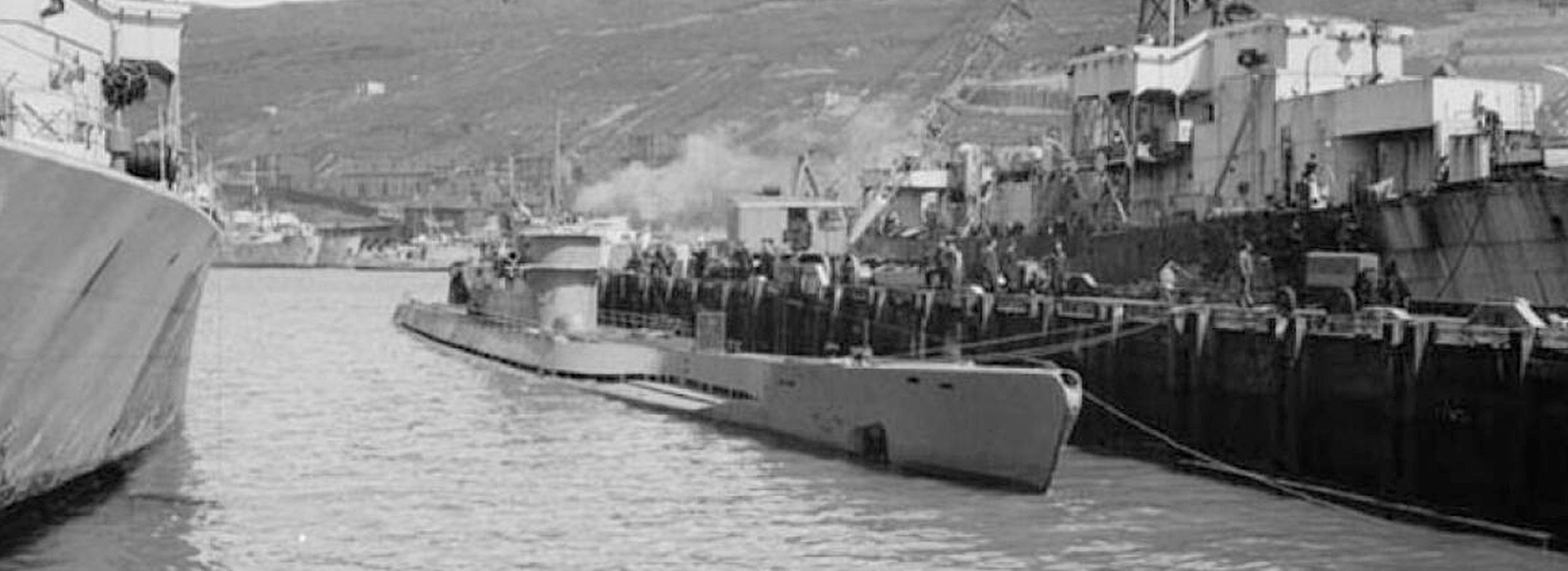
Newfoundland Attacked by Submarines
At Downhome, we delight in bringing you stories "straight from the horse's mouth," so to speak. More than a decade ago, founding editor Ron Young chatted to a Bell Island man with childhood memories of submarines sinking ships near his home. This personal account was so palpable, in his wisdom Ron printed the interview uninterrupted, in its entirety.

The August Gale of '35
In this 2002 story, a man recounts the details of being aboard a fishing boat in Placentia Bay during the legendary August Gale.

Putting the Past to Rest
Today, most people remember the tragic Truxtun and Pollux shipwrecks off St. Lawrence for the inspirational tale of Lanier Phillips, an African-American man who was moved by the kindness shown to him for the first time by white people, the people of Newfoundland. But we found another man who survived that ordeal. His story might not be as well known, but we feel it is just as powerful. Edward Lewis' story appeared in the November 2006 issue of Downhome.

The Legend of the SS Ethie
In 1919 the Steamship Ethie ran aground near Cow Head, Newfoundland during a winter storm. While the ship's passengers had a scary journey off the sinking ship on a bosun's chair, an infant onboard endured a more perilous rescue. The youngster was placed in a mailbag and sent to shore dangling dangerously from a rope. Downhome found that "mailbag baby" 87 years later, and shared her story.

Sacrifice at Sea
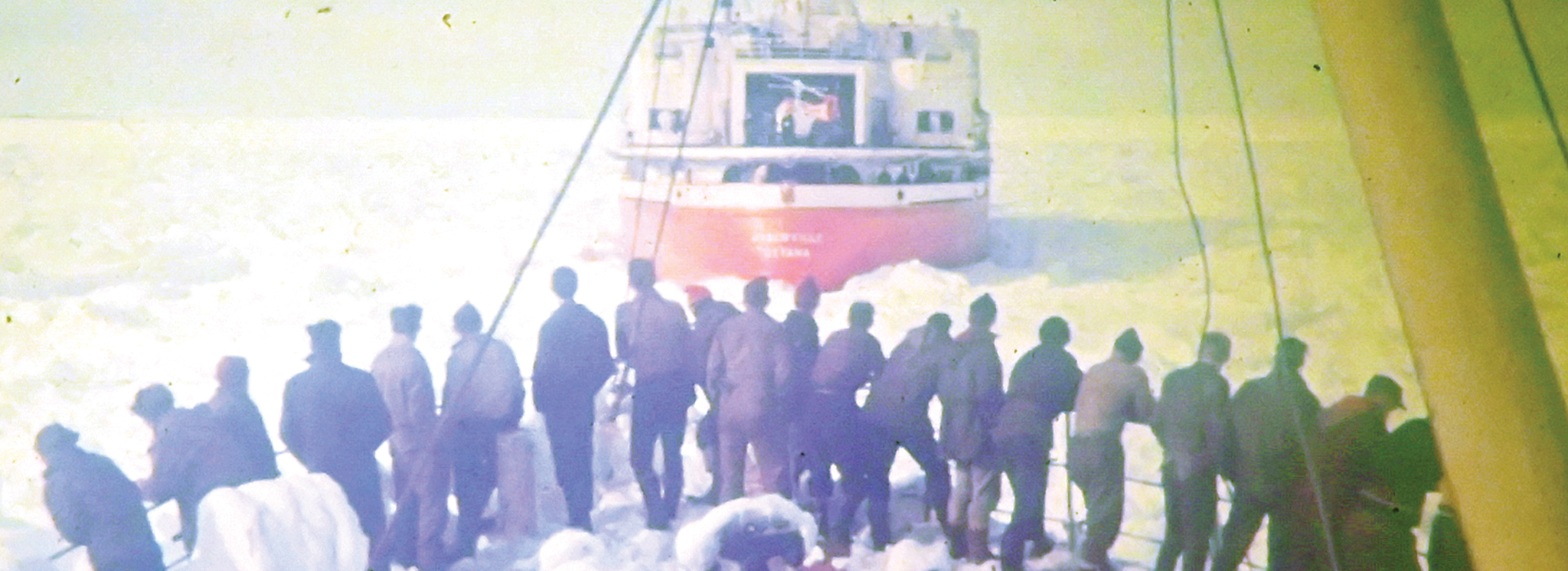
When the Germans attacked a convoy of 37 vessels during World War Two, a single escort ship was left with the deadly task of facing the formidable enemy. Few survived the incredible ordeal, including Newfoundlander Art Taylor. He spoke to Downhome in 2008.

War at Home
The Second World War really hit home for Newfoundlanders and Labradorians when a German submarine torpedoed the SS Caribou, a passenger ferry carrying innocent civilians. An off-duty Navy man on his way home to Cottrell's Cove, Newfoundland was onboard that tragic day. He contacted Downhome in 2011 and shared his amazing story of survival.

Adrift Alone
A member of the Royal Navy during WWI, Oliver Batt's story is a special one. Not only is it harrowing, but the full details of what he went through when his ship was torpedoed were not found until after his death - in a haunting letter the Herring Neck native had written to his mother.

The Long Trip Home
A member of the Merchant Navy during the Second World War, St. John's native Thomas Goodyear shared his story of a brutal attack, an unlikely rescue and ultimately, forgiveness for the unthinkable, in the December 2009 issue of Downhome.

Downhome remains committed to honouring our province's brave seafarers. Do you have an incredible story of survival? We'd love to hear about it. Click here to send us a letter.
Explore
A leisurely drive through the small communities that dot the shoreline of Iceberg Alley in spring and early summer practically guarantees an iceberg sighting or two. And if you get really lucky, you won't need to bother hopping aboard a tour boat or peering through binoculars for a better view. Below is a selection of photos of some of the biggest bergs we've ever received.


A tour boat gets an up-close look at a massive berg that floated into Long Point, Twillingate, NL in July 2007. Submitted by Lisa Hull of Orangeville, Ontario


Spotted off St. Anthony, NL. Submitted by Joan Oliver of Newfoundland


According to the submitter, this is "the biggest iceberg ever in our bay!" Submitted by Norma Sacrey of Ming's Bight, NL


Alex & Joanne Coffin of Tillsonberg, Ontario took photos of icebergs at Goose Cove during their vacation 2011 summer vacation.


Huge bergs that visited the Greenspond area make the houses dotting the shoreline look like miniatures! Submitted by Cindy Blackwood; taken by Frank E. Blackwood


Tourists and locals alike were amazed at how close this iceberg came to the shore in Summerford, Newfoundland. Submitted by Angela Leyte of Regina, Saskatchewan


Folks came out in droves to view the monstrous icebergs that floated into Quidi Vidi Gut in 2012. Submitted by Tracey Sheehan


What this iceberg lacks in above-water length, it sure makes up for in height. Submitted by Arlene Talbot of Englee, NL


The submitter points out this berg looks a little like a cruise ship; we're betting it's not nearly as cozy, though! Submitted by Joyce Morgan of Port de Grave, NL

Discovery
Downhome's Grant Loveys recently visited the workshop of a man we've dubbed the "Shoal Harbour inventor." Oliver Vardy spends his days thinking up and constructing new and unique musical instruments. Perhaps the most unique is an invention that Oliver calls the Melody Chord Harp. It is essentially a combination of guitar, harp and lap steel, with elements of each instrument working together in a totally new way. Its five individual sets of guitar strings are each tuned to a particular chord. Parallel to these strings is a single string that can be plucked with the thumb and a metal slide, providing a haunting melodic accompaniment to the strummed chords. It's a strange little machine, but it sounds wonderful.

Watch and listen as Oliver strums a tune.


For the full story on the Shoal Harbour inventor, see the May 2013 issue of Downhome.
Explore
Big waves, whales, icebergs, seabirds, moose – you get the picture. In the May 2013 issue, we explore some of the very best places to spot icons of Newfoundland and Labrador. Below is awesome video footage of some of our iconic treasures.

BIG Waves
On windy days, the shores of Middle Cove Beach on the Avalon Peninsula are lined with folks eager to see amazing wave action. But in 2010, some wave watchers got a rude awakening from Mother Nature when a rogue wave washed ashore on Middle Cove Beach. Check out this YouTube video of local news coverage of the phenomenon.


Whales
While the waters of Witless Bay, as well as Twillingate and Southern Labrador, provide almost guaranteed whale sightings in June, July and August, tour operator Ocean Quest takes whale watching to a whole new level with its "Close Encounters" tour.


Icebergs
In a province where two communities (St. Anthony and Twillingate) lay claim to the title "Iceberg Capital of the World," folks eager to see and photograph these glacial wonders are right to come here in search of them – and each spring and summer they do, in droves. But a group of tourists visiting Twillingate in July 2008 got an extra special iceberg sighting, as a giant berg foundered and fell into the churning waters before their very eyes.


Moose
We scoured YouTube for cool video footage of a moose - and this tourist's close encounter atop Gros Morne Mountain was, we felt, the most impressive. (Warning! Some mild foul language in this video - and who can blame her?)


Caribou
Residents of Buchans, Newfoundland will likely remember this very special 1980s episode of CBC's "On the Road Again," hosted by Wayne Rostad. The quality of the video isn't the greatest - but the quality of the story makes up for it!


*Note: For long-time readers of Downhome, the magazine's illustrator, Snowden Walters, used Clarence the Caribou as inspiration for a series of cartoon sketches that appeared in The Downhomer in the 1990s. Click here to check them out.

Newfoundland Ponies
Our province's heritage breed are known as hardy workers, used to plough fields and haul logs. But the Newfoundland pony featured in the video below, owned by passionate pony promoter Liz Chafe of Cappahayden, Newfoundland, is blessed with a rather unusual talent - we're fairly confident he'd make for stiff competition on any soccer field.


Actors & Re-enactors
The folks acting at L’Anse aux Meadows National Historic Site have to reach far back in time to get into their characters. In reconstructed sod huts Viking re-enactors mimic the Norse ways of life that played out here more than 1,000 years ago.


Lighthouses
Watch this video and come along for a tour of the Point Amour Lighthouse, the second tallest lighthouse in Canada, located at L'Anse Amour, Labrador.


Traditional Boats
Placentia-native and master boat builder Jerome Canning details the province's historic boat building tradition in the following video. With the help of the Wooden Boat Museum in Winterton, Newfoundland, locals with knowledge of the now rare art form are passing the tradition to younger generations.


Aboriginal Culture
Parks Canada cameras follow along as Inuit descendants visit the homeland of their ancestors, known now as the Torngat Mountains National Park.


Big Views
Watching waterfalls cascade down over high cliffs surrounding this 16-km glacier-carved, land-locked fiord in Gros Morne National Park, you'll think you've been transported to another time.


Seabirds
The puffins of Elliston usually prefer to stick to a small island a short distance from the headland - but this one decided to wander over for some close-up camera shots!


Today
18° c
Sunday
17° c
Monday
15° c
Tuesday
11° c
Change your
Location

Wednesday, May 22, 2013
01-20-24-33-37-43
Bonus: 42   Tag: 587361
Friday, May 24, 2013
09-19-21-24-39-43-48
Bonus: 06   Tag: 170148
Wednesday, May 22, 2013
02-03-04-05-24-35
Bonus: 18   Tag: 587361
From the Archives
By Ashley Colombe

Bags packed? Check. Passport? Check. Blood donation?

Canadian Blood Services is asking all Canadians to add blood donation to their vacation checklists this year, because summer tends to be a time when blood donations decrease.

“People get busy, they’re away on vacation, they’re busy with family commitments,” says Sharon Bala, communications specialist for Canadian Blood Services. “The other thing that happens is that people go on vacations to Mexico or parts of the Dominican Republic where malaria is an issue, and then when they come back they get deferred. (A trip to an area identified as a malaria-risk zone makes an individual ineligible to donate blood for one year.) So what we tell people is, give before you go.”

Likewise, Sharon adds, if you don’t live near one of Canadian Blood Services’ clinics, and you plan to travel to an area where there is one, consider making blood donation (which takes about an hour) part of your travel plans.

Why donate?
Regular blood donors have their own reasons why they donate. Some roll up their sleeves because they watched their parents do it before them, while others are inspired by loved ones who needed blood at one time. For Calvin Taylor of Kelligrews, Newfoundland, it’s about a sense of community.

“It’sImage a quiet way to give to people, especially to people you don’t know,” says Calvin. The 66-year-old has been quietly giving for nearly 50 years – to the tune of 525 blood donations. Since he retired from teaching 12 years ago, he’s been averaging 35-40 donations every year. (At left, Calvin is pictured giving his 500th blood donation.)

None of his loved ones has ever been in need of blood, but it’s a cause he feels strongly about nonetheless.

“If I’m driving along the road and somebody’s broke down, I stop and help for the simple reason that they have somewhere to go…and money can’t buy what they want,” says Calvin. He sees blood donation in the same light. “Helping people out through the journey of life is all it is,” he says.

Donating plasma is what has allowed Calvin to reach such an astonishing number of donations. While whole blood donors can choose to donate every 56 days, those who donate blood products – plasma or platelets – are eligible to give the gift of life every six and 14 days, respectively.

To ensure it is safe for Calvin and other frequent donors to donate so often, Canadian Blood Services requires a visit with the organization’s doctor once a year.

“We are very careful about safety, for the recipient but also for the donor,” says Sharon.

“Whole blood donors can only give every 56 days. By that time, their bodies will have replaced the blood they donated…Plasma and platelet donors can give more frequently because we only take their plasma or platelets and their bodies can replenish what they give much more quickly.”

Calvin is more than happy that he has been able to give so often. After all, he says, “Who knows when you will be in need and who’s going to help you?”

Giving and receiving
Richard Walsh, 56, of Chamberlains, Newfoundland (originally from Bay de Verde) knows what it feels like to be both a donor and a recipient.

Growing up, Richard (who’s donated blood 67 times and counting) recalls his father donating blood faithfully whenever called upon.

“WheneverImage they’d do a clinic in Old Perlican, they’d call him and he would go over and donate blood if he wasn’t out fishing, my father was a fisherman, and every now and then he’d go to the mail and there’d be a pin or a 25th donation certificate and he’d come home and show me,” remembers Richard. It was his father’s commitment to the cause that inspired Richard to become a blood donor. And although his father, Lawrence P. Walsh, has since passed away, Richard still carries on the tradition of giving – not only on his dad’s behalf, but for those individuals who find themselves at the mercy of strangers. (At left, Richard is pictured with some of his blood donor memorabilia he's collected over the years, just like his father did.)

But little did Richard know, one day he would be the one in need.

In 2000, Richard (who’s been donating blood regularly for about 25 years) was 46 years old, a husband and a father to two young daughters, when an upper GI bleed meant he needed to receive blood to survive. Richard remembers that fearful time like it was yesterday.

“I would throw up and then my stomach would fill up again and I’d throw up…and they couldn’t get (the blood) into me fast enough,” he says. “My family were called in from mainland Canada, from Ontario and places, because it was so touch and go…I made my peace. It was a scary time.”

Richard underwent surgery to fix the source of the bleeding, an ulcer that had attached to a blood vessel – and from the time he arrived at the hospital until he was wheeled into the recovery room, about 20 units of blood had been pumped into his body. That means 20 strangers had to walk through the doors of Canadian Blood Services to help save Richard’s life.

Though he’s been an avid blood donor since his early 30s, Richard says the thought that he might one day require blood never crossed his mind. And his own experience receiving the gift of life has given him a new perspective on blood donation.

“Giving blood is a way to make a difference to anyone from a tiny infant in a neonatal intensive care unit to an elderly individual needing that vital surgery for one last chance at life – and to think that you could be part of that ‘one last chance’ every time you donate,” says Richard, adding, “Look at me. I am alive today because some people – strangers – took an hour of their time to give the gift of life, my life. Thank you, thank you, thank you.”

If your idea of fun is playing in the snow and ice, taking in live entertainment and competing to win, then Labrador is your winter destination of choice. Labradorians like to do winter up big, with jam-packed outdoor carnivals and contests that take competition to the extreme. In anticipation of another wild Labrador winter, we've compiled an itinerary of some of the most exciting events scheduled to take place this year. Pick the activities you'd most like to participate in or watch, then plan your vacation in a place that was truly made for winter.

2010 Olympic Torch Relay Comes to Labrador
Date: November 11, 2009 (tentative)
Locations: Labrador West and Happy Valley-Goose Bay

The 2010 Olympic torch will be passing through Labrador City, Wabush, Sheshatshiu, North West River, Hopedale and Happy Valley-Goose Bay along its more than 45,000-kilometre journey to the 2010 Winter Olympics in Vancouver, British Columbia. Two places, in particular, have been designated "celebration communities." Afternoon celebrations in Labrador City will include a special performance of the Olympic Torch Relay theme song, sung by a compilation of choirs from Labrador City, Wabush and Fermont (Quebec). Later that evening in Happy Valley-Goose Bay, local entertainment will be provided by the community choir, the children’s choir, the Flummies and the Drumdancers.

Winterlights
Date: Early December (date TBA)
Location: Happy Valley-Goose Bay

Again this year, Happy Valley-Goose Bay plans to be all aglow during the Christmas season. Winterlights Celebrations are held each year in several communities across Canada. Homes, businesses and the community at large kick off the festive season by decorating with lights. Judges from the national Winterlights program spend a few days judging the colourful displays as well as community events. The switch will be pulled at the opening ceremony at the town hall, revealing the municipality's stunning lighting displays. The town's Santa Claus parade and Santa Claus breakfast also take place during the Winterlights festivities. The town has won awards for its Winterlights attractions in the past, so Happy Valley-Goose Bay is definitely one to watch this season. This year, watch for a special lighting display along Hamilton River Road.

Eagle River Dart Tournament
Date: February 5-6, 2010
Location: Port Hope Simpson

For more than 20 years, residents have travelled in droves from all over southern Labrador for the Eagle River Dart Tournament, which takes place in Port Hope Simpson's recreation centre. If you're interested in participating in this year's event, call by mid-January to register your team for two days of fun and camaraderie. If your team has great aim, you could walk away with a cash prize - and bragging rights, of course. And after all the darts have been thrown, kick up your heels at the dance, which will take place this year on Saturday, Feb. 6.

Ronald Strugnell Memorial Dog Team Race
Date: February 13, 2010
Location: St. Lewis

Now in its tenth year, the Ronald Strugnell Memorial Dog Team Race is an exciting event that pays tribute to a former mode of transportation in Labrador and the man who loved it dearly. Ronald Strugnell kept dogs and loved travelling along Labrador's rugged landscape by dog team. His son Chad started the Memorial Dog Team Race as a dedication to his father, who passed away in 1999, to honour his love of the sport.

Makkovik Music Jamboree
Date: March 2010 (date TBA)
Location: Makkovik

The Makkovik Music Jamboree is a true community event, bringing together people of all ages and all walks of life for an evening of great music. Performers typically arrive from all over Labrador for the unique musical event, which usually features a performance or two in the Innuttitut language - a rare and special treat. This year will mark the 16th annual jamboree.

Heritage Sled Dog Race
Date: February/March (date TBA)
Location: William's Harbour

Get to William's Harbour bright and early on the day of the Heritage Sled Dog Race. Participants take off with their team of six dogs from the southern Labrador community around 9 a.m. for the 20-mile race, which takes about two hours to complete and ends back in the William's Harbour. Funds raised in the community pay for the cash prizes bestowed on winners (though win or lose, all participants walk away with a prize). Participants travel from all over Labrador to participate in this annual event - and many come out just to watch. When the race is over, drop by the community hall for refreshments, try your luck at the spinning wheels, and help your kids reel in prizes from the fishpond.

Winter Carnival
Date: March 2010 (date TBA)
Location: Labrador City

The Winter Carnival is seven to nine days of jam-packed fun and activities. Take part in the snow and ice sculpture competition (or just marvel at the masterpieces), take a twirl on the soccer pitch-turned outdoor skating rink, warm up at a community bonfire or watch the Zamboni Olympics in the arena. If you're a snowmobiling enthusiast, drop by the arena to watch a parade of antique snowmobiles and stick around to meet the Cain's Quest participants before they set off on the ultimate journey. Children can get in on the Cain's Quest action by participating in a mini Cain's Quest race, which takes place on a groomed trail around the Gord Young softball field. Cap off the Winter Carnival fun by attending the banquet and dance, where you'll get to watch the winners of Cain's Quest receive their awards.

Labrador Winter Games
Date: March 7-13, 2010
Location: Happy Valley-Goose Bay

Hailed the "Olympics of the North," the 10th Labrador Winter Games will bring together close to 600 volunteers and 450 athletes who will compete in events that will test the true northern spirit. During the "Labrathon," athletes will work their way through a course covering approximately 500 metres while undergoing a test of skills a trapper would need to survive on the Big Land. The highlight of the entire event is the "Northern Games," a four-part competition held over two nights, consisting of events like the "Seal Race" and "Labrador Hurdles."

Cain's Quest
Date: March 13-20, 2010
Location: Labrador City

The longest race of its kind in Canada, Cain's Quest Snowmobile Endurance Race will push your body, mind and machine to the limit. Guided by GPS and pure adrenaline, teams of two riders race day and night against wild weather and freezing temperatures along more than 2,500 km of rugged terrain to win $65,000 in cash. With riders starting and ending in Labrador City and travelling as far north as Nunatsiavut, this event brings a whole new meaning to the term "extreme sports."

SnoBreak
Date: March 20-27, 2010
Location: Happy Valley-Goose Bay

A week-long celebration of everything winter, SnoBreak offers something for the whole family, from geocaching and gospel nights to ice carving, talent shows, turkey curling and tobogganing. Participants can also enjoy snowmobile rides along Labrador's beautiful trails, complete with boil ups (and maybe even some ice fishing). If you feel like letting your royal side show, enter to be the new SnoBreak king or queen (or SnowBaby for the tots). This winter's 10th anniversary event will also honour SnoBreak founder Paul Williams, who passed away several years ago after a battle with cancer.

Great Labrador Loppet
Date: March 27, 2010
Location: Labrador City

The only loppet running between two provinces, the Menihek Nordic Ski Club's 35th annual Great Labrador Loppet will see skiers of all stripes and skill levels hit the slopes to participate in a 10, 27 or 54 km event, running from Fermont, Quebec to Labrador City. The groomed trails are equipped with rest stops and feed stations so competitors can refuel before getting back to the action. Afterwards, participants can sit back and relax (or kick up their heels) during the steak supper, dance, and award presentations.

Big Land Loppet
Date: March 27, 2010
Location: Happy Valley-Goose Bay

The annual Big Land Loppet, sponsored by the Birch Brook Nordic Ski Club, brings together people from all over the country to take in the beauty of the Labrador wilderness along scenic ski trails of 4.4, 11, 22 and 44 kilometres. Those from ages seven to 70 have participated in the loppet. In the days leading up to the event, the trails are groomed and a group of dedicated volunteers work to get everything in place, from the food and drink stations along the trails, to the cowbells at the finish line. After the event, skiers can warm up in the club's big, beautiful and newly constructed chalet.

Big Land Challenge Dog Team Race
Date: March (date TBA)
Location: Happy Valley-Goose Bay

Held annually in Goose Bay's Terrington Basin, participants in the Big Land Challenge Dog Team Race use traditional Labrador komatiks instead of basket sleds to traverse across 20 km of frozen land and water. The event is as much about keeping the Labrador spirit alive and preserving and celebrating an important part of the area's history and culture as it is about providing both participants and spectators with a thrilling experience.

Canada’s East Coast is a photographer’s paradise – but if you’re clueless about cameras, those vibrant outport communities and rugged coastal scenes may fall flat in photo-form. Here are a few basic tips we hope will help you take great photos.

The Right Angle
When taking portraits, look your subject in the eye for a more intimate image – afterall, the eyes are the window to the soul! If you’re photographing young children, get down to their eye level.

Brooke ImageVallis' attempt at a "fish face" is so adorable at eye-level! (Harold Vallis photo)


Up Close and Personal
Moving closer to your subject often produces more powerfully detailed images. If you can’t physically move closer, try zooming in as much as your camera will allow to achieve a tighter shot.


A close-up of a pitcher plant. (Melissa Sheppard photo)

DeImage-clutter
Before snapping a picture, take a look around for any obtrusive clutter that may take away from your shot. Aim for photos free of power lines, street signs, light poles, litter, etc. This photo (left) would have been much more dramatic if only the photographer had moved to a vantage point where the unsightly power lines weren't included.


Provide Scale
Picture this: You’re standing in a gorgeous locale staring at gigantic, rugged cliffs that tower into the sky above you. The scene is just larger than life – and you want to capture it for your photo album. You snap a photo thinking it’ll be frameworthy – but when you finally see it enlarged on your computer screen, you are totally under-whelmed. Why don’t those cliffs look as magnificent as they were when you were standing in front of them? If you’d just had something (or someone) in the photo to create a sense of scale, the scene probably would have turned out more like you remember it. Next time, take a loved one (or even your pet pooch!) along to help create scale in photos. Or, shoot an area with a photogenic object, like a boat or wharf, in the foreground.


Doesn't the Lewis Hills landscape look larger than life with this backpacker providing scale? (Aiden Mahoney photo)

The Facts on Flash
When shooting indoors, turn OFF your flash. Oftentimes, using your flash inside produces a flat, dull light. Instead, have your subjects stand near (though not directly in front of) a window for great, natural light. Outside, turn your flash ON to prevent the sun from creating deep, dark shadows.

Obey the Rule
One effective, yet simple, method many photographers use to create more aesthetically pleasing photos is the "rule of thirds." To adhere to the rule of thirds, divide a scene you plan to photograph into thirds – both horizontally and vertically. Move your camera so that the subject (ie. a boat, lobster pot, person, animal, etc.) appears where any of the lines intersect.


Photographer Brian Saunders was obeying the rule of thirds when composing this scenic lighthouse photo.

Stay in Focus
Holding the camera steady while shooting is extremely important. If you don’t own a tripod, lean against a wall to steady yourself while taking photos. Make sure you’re focused on the subject of your photograph and not on whatever’s in the background. Lock your focus by centering the subject, then press and hold the shutter button halfway down. While holding the shutter button halfway, reposition your camera so the subject is off-centre (obeying the rule of thirds). Then press the shutter-button all the way down to take a perfectly focused photo.

Lighting! Lighting! Lighting!
Of course, choosing a great location is very important when taking photographs – but bad lighting can make even the most scenic of locales look dull and drab. The best times of day to take photos outdoors are early in the morning, just after dawn; and late afternoon, just before sunset. At these times, sunlight is more rich and shadows are larger. Not getting many sunny days? Even overcast skies can make for nice photos. A bright yellow dory or deep red saltbox house will really pop against a grey background.


These deep red fishing stores brightened up a grey, foggy day in Salvage, Newfoundland. (Dave Wheeler photo)

mommy jingles
Should daredevils (ie. iceberg climbers, transatlantic rowers, etc.) have to pay for search and rescue efforts when they require them?
Yes, it will make them think twice about taking unnecessary risks
No, having to pay might discourage calls for help, ending in injury or tragedy
See results     Leave Comments
 
Downhome inc
Web Extras
submissions
enter now and WIN!
Shop Downhome  Jameslane Publisher  Castnetdesign  Real Estate  Downhome Expo
Home and Cabin  Everyday Recipes  Inside Labrador  explore